Christmas Town Digital Papers: Premium Backgrounds for Seasonal Sellers
As a digital product creator who has spent years building shops on Etsy and Creative Fabrica, I know that the difference between a listing that sells and one that sits in the shadows often comes down to the quality of the foundation. Recently, I evaluated Christmas Town Digital Papers, a collection specifically categorized under Backgrounds. My goal was not just to admire the visuals, but to stress-test this asset for commercial viability. Can it support high-volume sublimation prints? Will it hold up as a backdrop for complex Cricut projects? Does it have the visual punch needed for clickable thumbnails? Here is my honest review from the perspective of a seller preparing for the holiday rush.
The First Impression: Mood and Market Fit
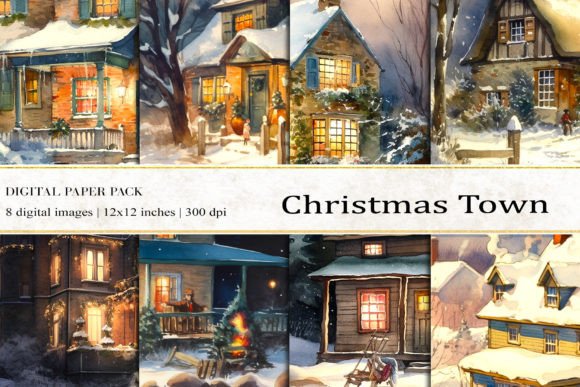
When you first open a pack of Christmas Town Digital Papers, the immediate feeling is one of cohesive storytelling. The design language leans heavily into a charming, rustic-festive aesthetic rather than a generic, mass-produced look. This distinction matters immensely when targeting niche audiences like crafters and boutique shop owners. The colors are warm and inviting, featuring deep reds, forest greens, and soft creams that evoke a cozy winter evening. For a creative entrepreneur looking to build a brand identity around "handmade" or "small business branding," this asset offers the perfect visual hierarchy to elevate their product line.
The appeal here is broad yet specific enough to stand out. It feels playful without being childish and elegant without being stiff. This balance makes it highly versatile for various buyer personas, from mothers creating nursery prints to designers crafting luxury invitation templates. The texture and depth suggest a premium feel, which immediately increases the perceived value of any final product created with these papers.
Real-World Application: Building a Product Collection
I decided to put Christmas Town Digital Papers to the test by simulating a new seasonal collection launch. The versatility of this graphic design asset became apparent almost immediately. It is not merely a background; it is a foundational element for a wide array of commercial design projects.
- Print-on-Demand & Sublimation: These papers are ideal for tumbler wraps and tote bag designs. When layered with white text or simple SVG cut files, the contrast creates a professional finish that customers expect on print-on-demand platforms.
- Digital Downloads & Planners: For sellers offering printable wall art or planner stickers, these backgrounds provide the necessary structure. They allow users to easily add dates or notes without the design feeling cluttered.
- Canva Templates & Social Media: Content creators can use these assets to create engaging blog graphics or promotional visuals. The consistent style ensures brand consistency across all social media channels.
- Physical Merchandise: From greeting cards to mug designs, the resolution holds up well. Whether used for a single item or a large decorative layout, the paper maintains its integrity.
In a real shop scenario, I would bundle these papers with complementary clipart or SVG designs to create a "Christmas Town Bundle." This strategy increases the average order value and provides a complete solution for buyers who want an instant aesthetic for their own projects.
Strategic Use in Product Presentation
One of the most critical aspects of online selling is how a product looks in a thumbnail. A weak background can kill a listing's click-through potential regardless of how good the actual content is. Christmas Town Digital Papers excels here because the patterns are distinct enough to be recognizable even at small sizes. When used as a backdrop for mockup previews, they frame the product beautifully, drawing the eye to the center of the image.
For listing images, these backgrounds help tell a story. Instead of a plain white square, a listing featuring a mug design set against a Christmas Town pattern instantly communicates the festive mood. This visual storytelling builds customer trust and helps buyers visualize the end result before they purchase. Furthermore, using these assets allows for the creation of cohesive seasonal collections, making your shop look organized and professional rather than scattered.
Where the Asset Shines and Where to Exercise Caution
While the strengths of this design bundle are clear, an experienced seller knows where to apply caution. Understanding the limitations is just as important as knowing the capabilities.
Best Use Cases:
This asset works best for large product previews, themed bundles, and decorative layouts. It is perfect for printable products where the full pattern is visible, such as wrapping paper, scrapbooking kits, or digital paper packs. It also serves as an excellent base for packaging design or brand identity materials where a festive touch is required.
Areas Requiring Care:
There are scenarios where Christmas Town Digital Papers might need adjustment. If you are creating tiny sticker details, a busy background can make the main illustration hard to see. In these cases, simplifying the layer or choosing a solid color variation is necessary. Additionally, for Cricut or Silhouette projects requiring clean cutting lines, ensure that the background does not interfere with the vector paths. If the pattern is too complex, it may confuse the cutting machine if not properly separated.
Be mindful of low-resolution print products; while the digital file is likely high quality, scaling it up for large format printing requires verification. Similarly, on crowded thumbnails or dark backgrounds, ensure there is sufficient contrast so that text remains legible. Avoid using these papers in text-heavy templates unless the typography is bold and clearly separated from the pattern.
Practical Seller Notes for Commercial Success
Before adding Christmas Town Digital Papers to your inventory or using them in client work, follow this checklist to ensure a smooth workflow and avoid common pitfalls.
- Test on Real Mockups: Never assume a design will look good until you see it in context. Place the digital paper behind a realistic product mockup to check the scale and color accuracy.
- Check Thumbnail Appeal: Resize the image to 500 pixels wide to simulate how it will appear in search results. Does it still pop? Is the visual hierarchy clear?
- Verify Contrast and Backgrounds: Test the paper on both white and dark backgrounds. Some patterns may lose detail against light surfaces or become muddy on dark ones.
- Inspect File Quality: Confirm the PNG transparency is clean with no halos. If working with SVG files, inspect the cut quality to ensure lines are crisp and ready for vinyl cutting.
- Confirm Resolution: Ensure the file meets the DPI requirements for your intended output (usually 300 DPI for print).
- Organize for Customers: If reselling, organize the files clearly. Buyers appreciate folders labeled by theme or color.
- Font Pairing Strategy: Experiment with different font styles to complement the paper. A serif font adds a classic touch, a sans-serif font offers modernity, and a script or handwritten font enhances the handmade feel. Display fonts can be used for headers to create strong visual impact.
- Review Licensing: Always read the commercial license agreement. Some assets allow you to sell physical products made with the design, while others restrict resale of the raw digital file itself.
Evaluating Christmas Town Digital Papers through the lens of a seasoned seller reveals a tool that is robust, versatile, and ready for the marketplace. It fits seamlessly into the workflows of Etsy sellers, POD providers, and digital creators alike. By understanding its strengths and respecting its limitations, you can leverage this graphic design asset to create a professional-looking online product collection that resonates with buyers during the holiday season.
Whether you are designing a sublimation design for tumblers, a digital download for planners, or a series of social media graphics, this background collection provides the visual foundation needed to succeed. It transforms simple designs into polished, market-ready assets that drive sales and build brand loyalty.